
The suspension holds the weight of the truck or trailer and keeps the tires planted on the road. Springs, shocks, bushings, and control arms all take a beating from potholes, loaded trailers, and the gravel roads around Knob Noster. Every mile adds a little more wear, especially on routes with rough pavement or washboard gravel. Over time rubber dries out, metal fatigues, and parts that used to soak up the bump start passing it straight into the cab. That is when you start feeling every seam in the highway and every rut in the shoulder. A truck riding rough is not just uncomfortable. It is harder to control, it wears tires unevenly, and it puts more stress on everything else in the suspension system that is still trying to do its job.
Signs Your Suspension or Steering Needs a Look
- Truck pulls to one side even on flat road
- Steering wheel shakes at highway speed
- Clunking or knocking over bumps
- Trailer sways more than it used to
- Uneven wear on your tires
- Nose dips hard when you brake
Steering problems usually show up as looseness in the wheel or a pull to one side when you are driving straight. Tie rods, ball joints, and steering linkage wear out from the constant back and forth of turning a heavy rig day after day. A worn part might only show up as a little play in the wheel at first, barely enough to notice. But it gets worse fast once it starts, especially under a loaded trailer pushing extra weight through the front end. Ignore it long enough and that small play turns into real wander on the highway, harder braking, and tires that cup or wear unevenly. Steering wear rarely gets better on its own, it just gets more noticeable and more dangerous the longer it sits.
Before anything gets replaced we check the whole system by hand instead of guessing from a quick look. That means jacking up the truck or trailer, grabbing each wheel and rocking it to feel for play, checking tie rods and ball joints for looseness, and looking over bushings and shocks for cracks or leaks. We work through the front end piece by piece so nothing gets missed. We do not swap parts on a guess and hope it fixes the complaint. We find what is actually loose, worn, or leaking and tell you straight what we see, so you know exactly what is driving the shake, the pull, or the play in the wheel before any part comes off the truck.

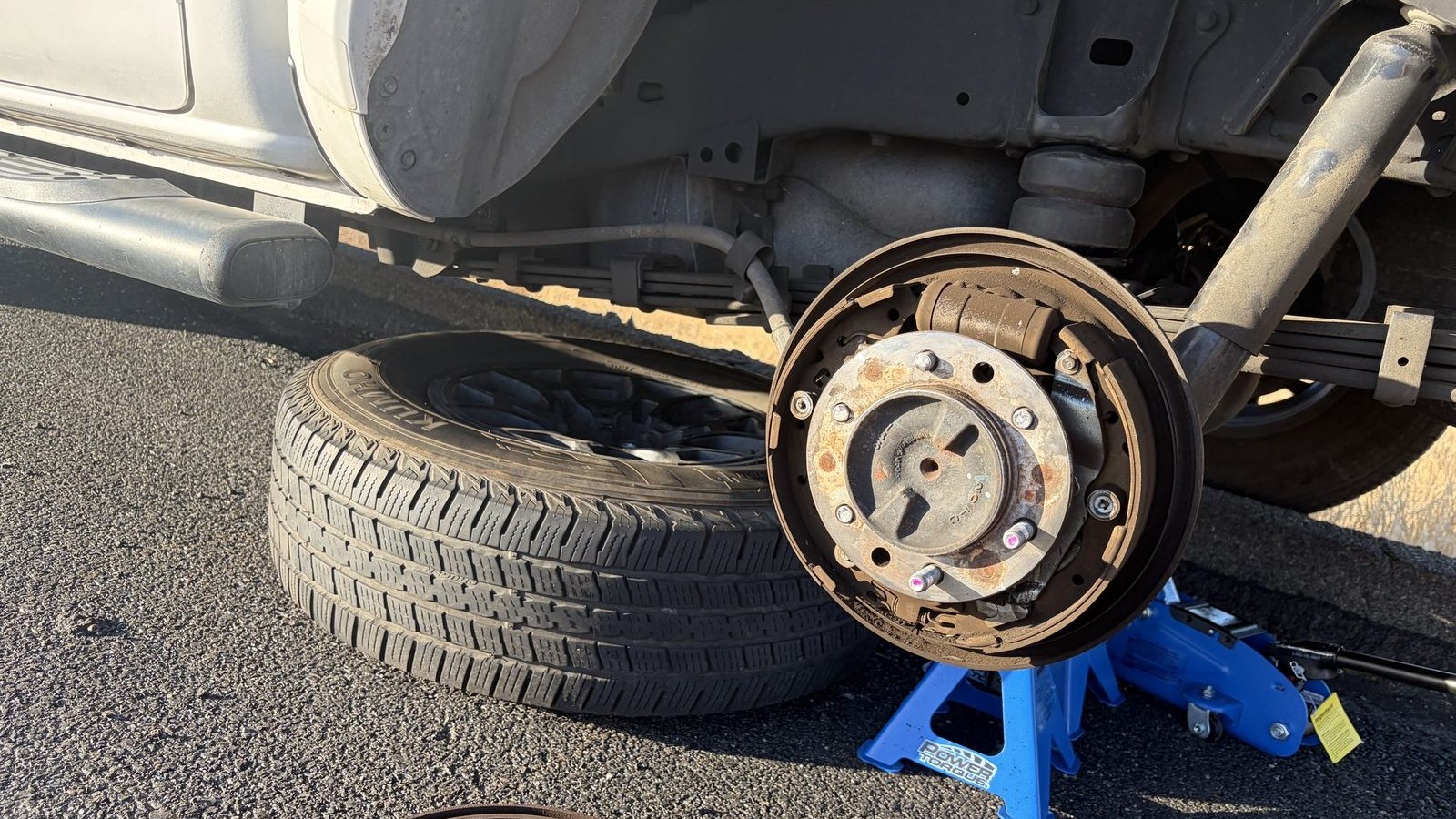

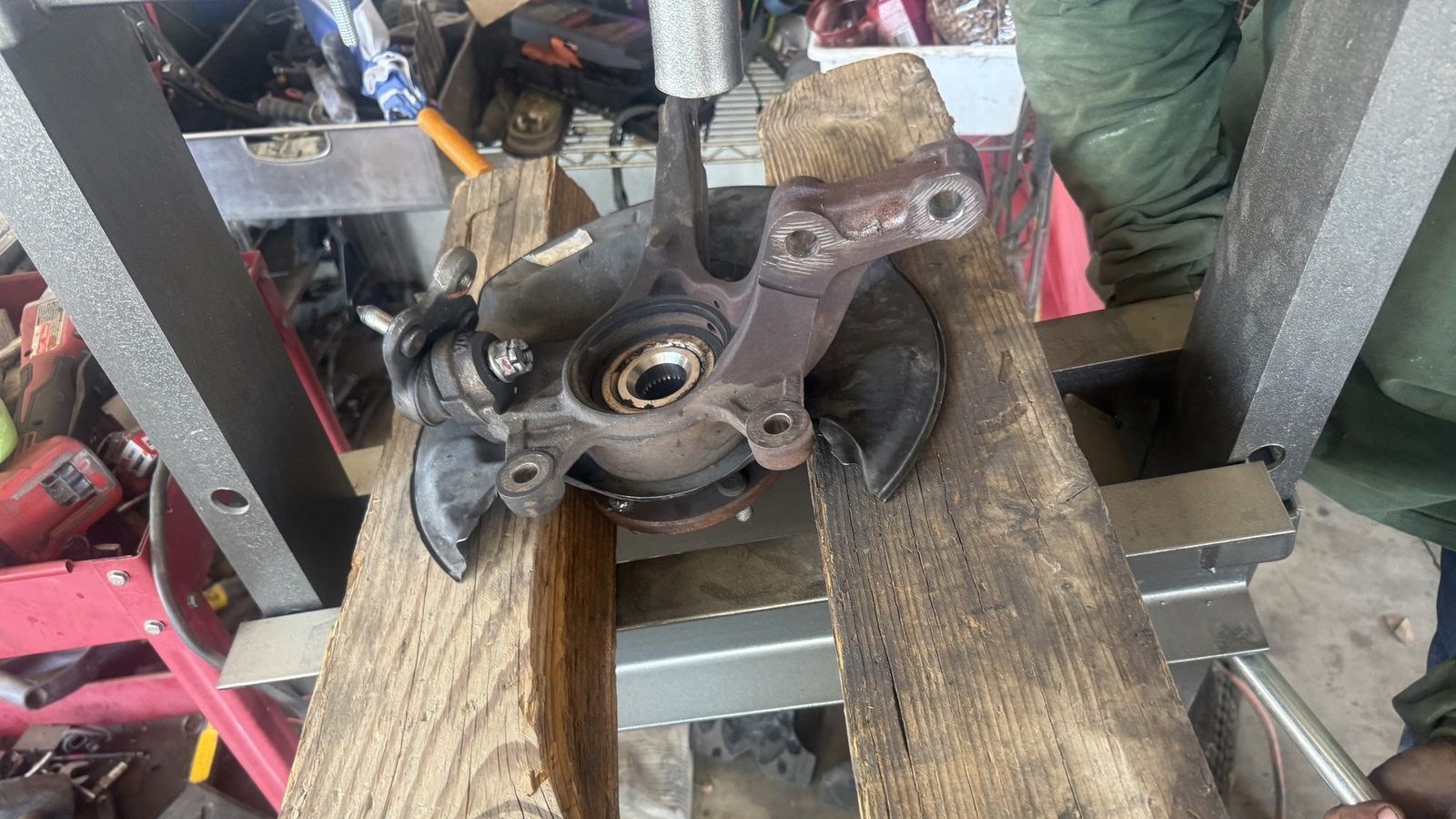
The repair itself depends on what is actually worn once we find it. A shock or strut swap means pulling the old unit off, putting the new one on, and torquing it down to spec so it holds right. A tie rod or ball joint job means separating the worn joint, pressing in the new part, and getting an alignment check after so your tires wear evenly instead of chewing up tread on one edge. Bigger jobs like control arm replacement take more time on the lift because there is more to unbolt, more to inspect around it, and more to put back together correctly. Whatever the part, the goal is the same, get the wheel tracking straight and the ride back to feeling solid.
What changes the size of the job is how many parts are worn and how hard they are to get to under the truck. One bad shock on its own is a straightforward fix. A whole front end full of play, rust, or seized bolts takes longer and means more parts coming off before we get to the one actually causing trouble. Rusted hardware alone can add real time to a job that would otherwise be simple. Trailer suspension work can also mean dealing with leaf springs, air bags, or axle alignment depending on what you are running and how the trailer sits when it is loaded versus empty. Every rig is a little different, so the job size really comes down to what we find once we are under there.
Until we get to it, slow down over rough road and pay attention to whether the shaking or pulling is getting worse week to week. A bad tie rod or ball joint can fail without much warning once it is far enough gone, and that is not something you want happening at highway speed under a loaded trailer. If the play in the wheel feels bad, or the truck wanders more than it used to, do not keep pushing long miles on it hoping it holds. Worn suspension parts do not heal themselves, they just get looser. Call us and we can talk through what you are feeling in the wheel or the ride, figure out what it sounds like, and get you on the schedule.
We cover Knob Noster and the surrounding area, including Grover, La Monte, Simpson, Montserrat, Emma, Houstonia, and Sweet Springs, working on trucks and trailers that depend on a solid front end to stay safe on the road. Suspension and steering issues do not always announce themselves clearly, sometimes it is just a feeling that something is a little off in the wheel or a vibration that was not there last month. That feeling is usually worth checking out before it turns into a bigger repair or a part that lets go on the highway. Give us a call at +1660-312-6110 and describe what you are noticing, and we can help you figure out the next step for your rig.
What to Tell Us When You Call
- Year, make, and model of the truck or trailer
- What you feel, like shaking, pulling, or clunking
- When it started and if it is getting worse
- Whether the truck is loaded or running light when it happens
 Supercanic