
Brakes on a semi or trailer do a lot more work than brakes on a pickup. They are slowing down tons of loaded weight, over and over, trip after trip. The shoes, drums, and air chambers take the heat and the wear every time that rig rolls through Knob Noster or out toward Sweet Springs. Over time that friction material thins out, the air lines get weak spots, and the whole system starts to lag behind what the driver is asking it to do. A rig that is used hard every day, running loaded runs through towns like La Monte and Houstonia, burns through brake parts faster than one that sits more. The heat cycles alone will wear a drum down long before the miles on the odometer suggest it is time. That is just how heavy duty brake service goes, the system gets punished and it needs attention before it gets dangerous.
Signs You Need Brake Service
- Grinding or metal on metal sound when you slow down
- Trailer pulls to one side under braking
- Air system takes longer to build pressure
- Brake pedal feels low or soft
- Warning light for the brake system stays on
- Uneven wear on the drums or shoes you can see
Drivers usually notice it before a shop ever looks at it. A grinding noise when you brake, a trailer that pulls to one side, or a pedal that feels soft are the big three warning signs. Some notice the air system takes longer to charge up before you can release the parking brake, which usually points to a leak somewhere in the lines or a compressor that is falling behind. Others feel the trailer lag a beat behind the tractor when braking hard, which is its own kind of warning. Any of those are signs the brakes need a look before the next haul, not after it. Waiting on a brake problem on a loaded semi is not like waiting on a car. The stopping distances get longer fast, and a hauler running routes near Grover or Emma does not want to find that out on a downhill grade with a full trailer behind them.
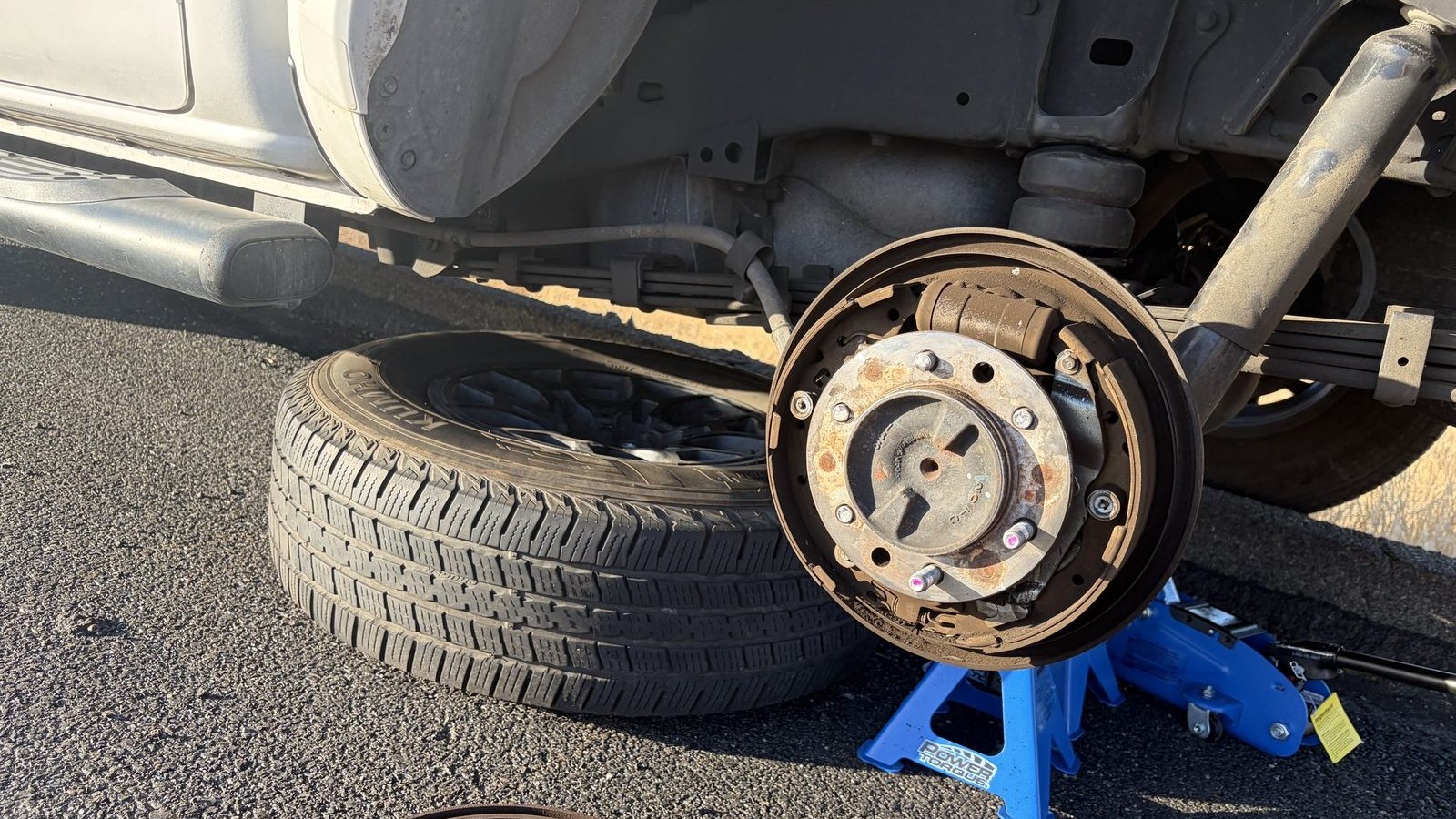
Before we replace anything we check the whole system, not just the part that is making noise. That means pulling wheels to look at drum and shoe wear, checking air chambers and slack adjusters for play or sticking, and testing line pressure across the whole rig. A worn shoe might just be the symptom of a slack adjuster that quit doing its job months ago. We want to know why a part failed, not just that it failed, so we are not back out here in a month for the same problem. That kind of digging takes a little longer up front but it saves a second trip later, which matters more to a driver trying to keep a schedule than it sounds like at first. We treat the air system and the friction parts as one job, not two separate ones.
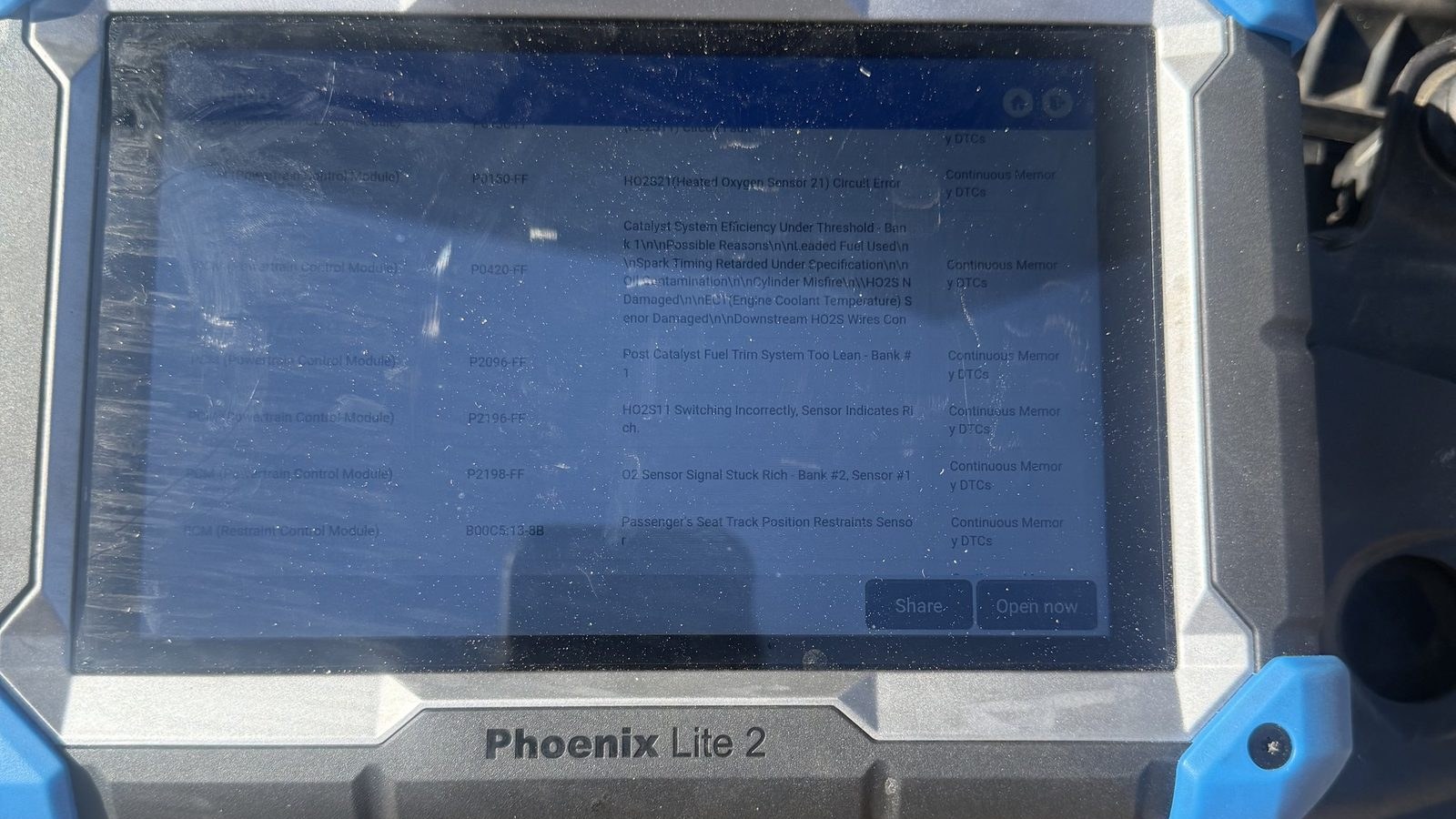
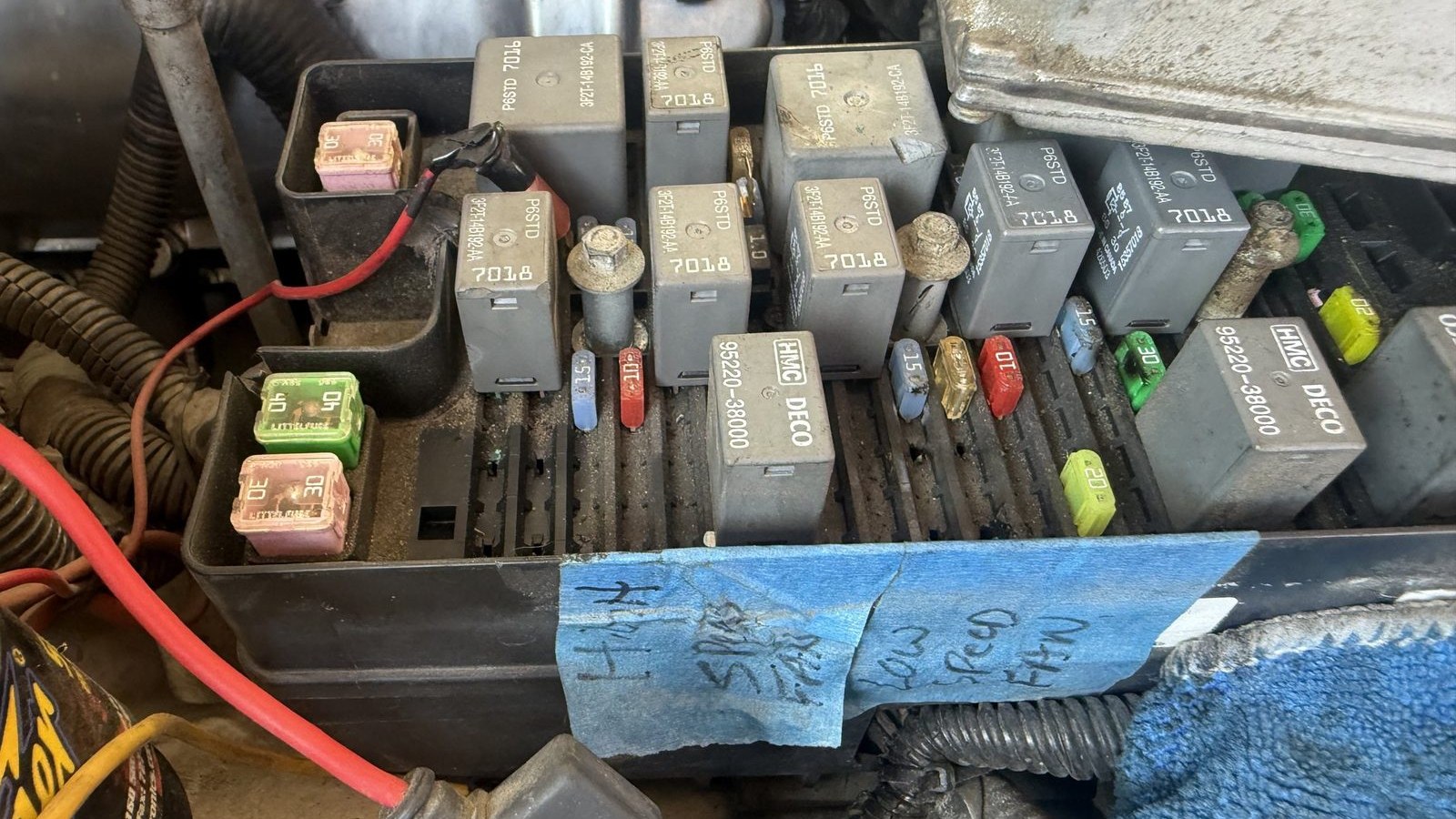
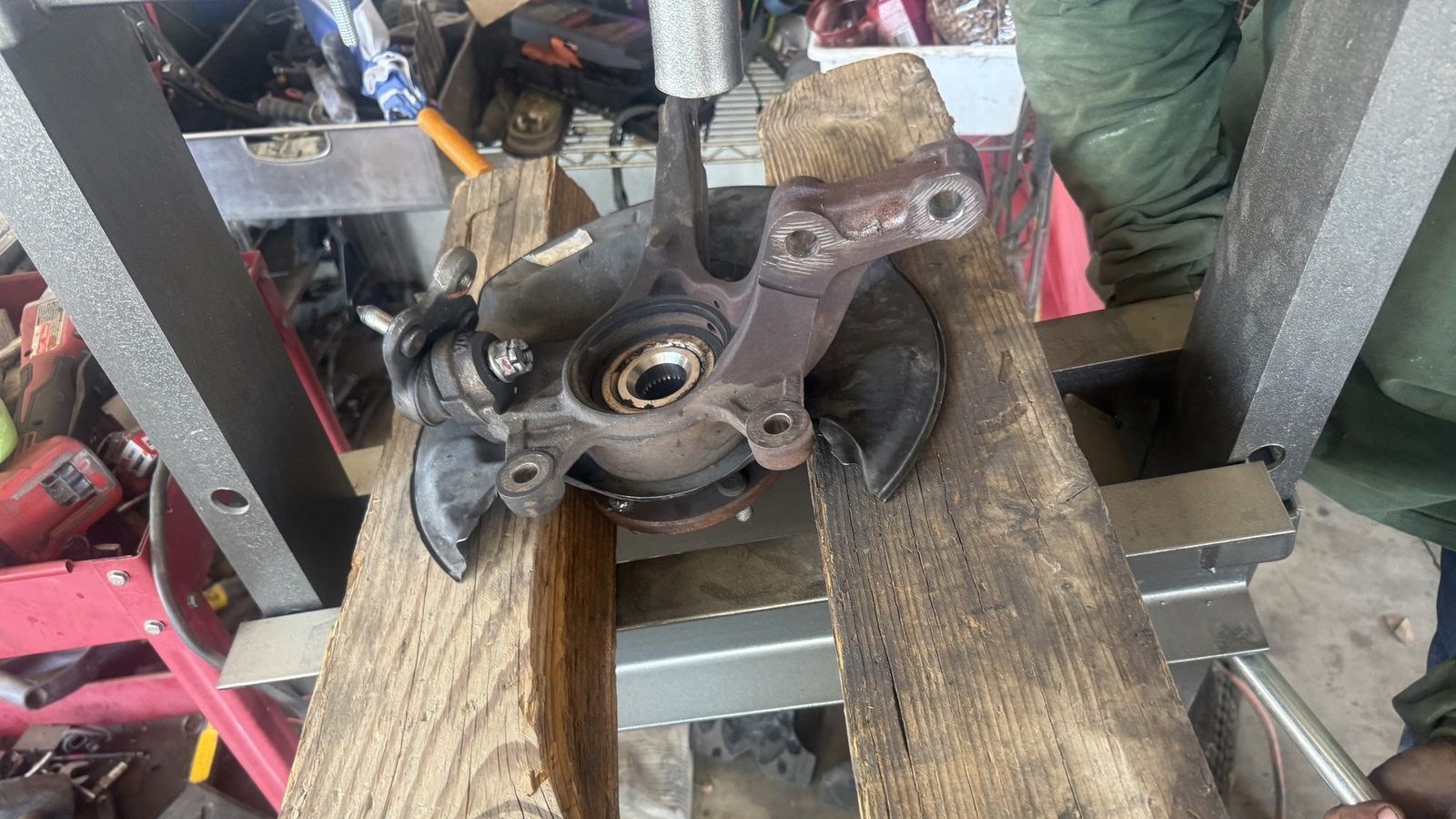
The job itself depends on what we find once the wheels come off. Usually it means pulling wheels, inspecting or replacing shoes and drums, checking the S-cams and slack adjusters for wear, and testing the air system end to end for leaks or slow builds. We adjust everything to spec once the parts are in, because a brake job that is not adjusted right defeats the purpose of doing it at all. We road test before we call it done, listening and feeling for anything that is still off. On a trailer brake job we also check the ABS wiring since that gets knocked around and chewed on over time, dragging along gravel roads and catching on debris. A clean brake job with a frayed ABS harness is still a job half finished, so we look at both.
What makes a brake job bigger is usually the air system, not the shoes. Leaking chambers, cracked lines, or a compressor that is not keeping up turn a simple brake swap into a bigger repair that touches more of the truck. Air brakes rely on steady pressure to work right, and if that pressure is leaking out somewhere, new shoes will not fix the real problem underneath it. Corrosion from road salt and age on an older trailer can also mean more parts need attention than just the ones that are obviously worn, since rust works on fittings and lines you cannot see from the ground. A trailer that has worked through a few winters around Montserrat or Simpson often has more going on under there than the driver expects, and we would rather find it on the lift than out on the road.
Until we get out there, go easy on the brakes. Leave more following distance, slow down earlier than you normally would, and avoid hard stops if you can help it, since hard braking on a weak system wears parts faster and gives you less margin if something slips. If the pedal feels unsafe or the air pressure will not build to where it should, do not drive the rig. That is not a problem to push through on a loaded trailer. Call us and we will get you sorted out where you are parked, whether that is a yard, a lot, or the shoulder somewhere between here and the next town. Mobile work means the rig does not have to make it back to a shop on brakes that are already failing, which is the whole point of calling before you roll another mile.
We work on brake service calls across Knob Noster and the surrounding area, including runs out toward La Monte, Sweet Springs, Houstonia, Grover, Emma, Montserrat, and Simpson. Being set up to come to the truck instead of asking the truck to come to us matters most on a brake job, since a rig with bad brakes is one that should not be driven further than it has to be. We check the whole system every time, not just the squeaky part, because a brake repair that misses the root cause just brings the same grinding noise back in a few weeks. Whether it is a worn shoe, a weak air chamber, or wiring that got chewed up along the way, we would rather find it now, parked, than have a driver find it out on the road under a full load.
What to Tell Us When You Call
- Year, make, and model of the truck or trailer
- What the brakes are doing: grinding, pulling, soft pedal
- Your exact location or mile marker
- If it is a straight truck, tractor, or trailer axle
 Supercanic